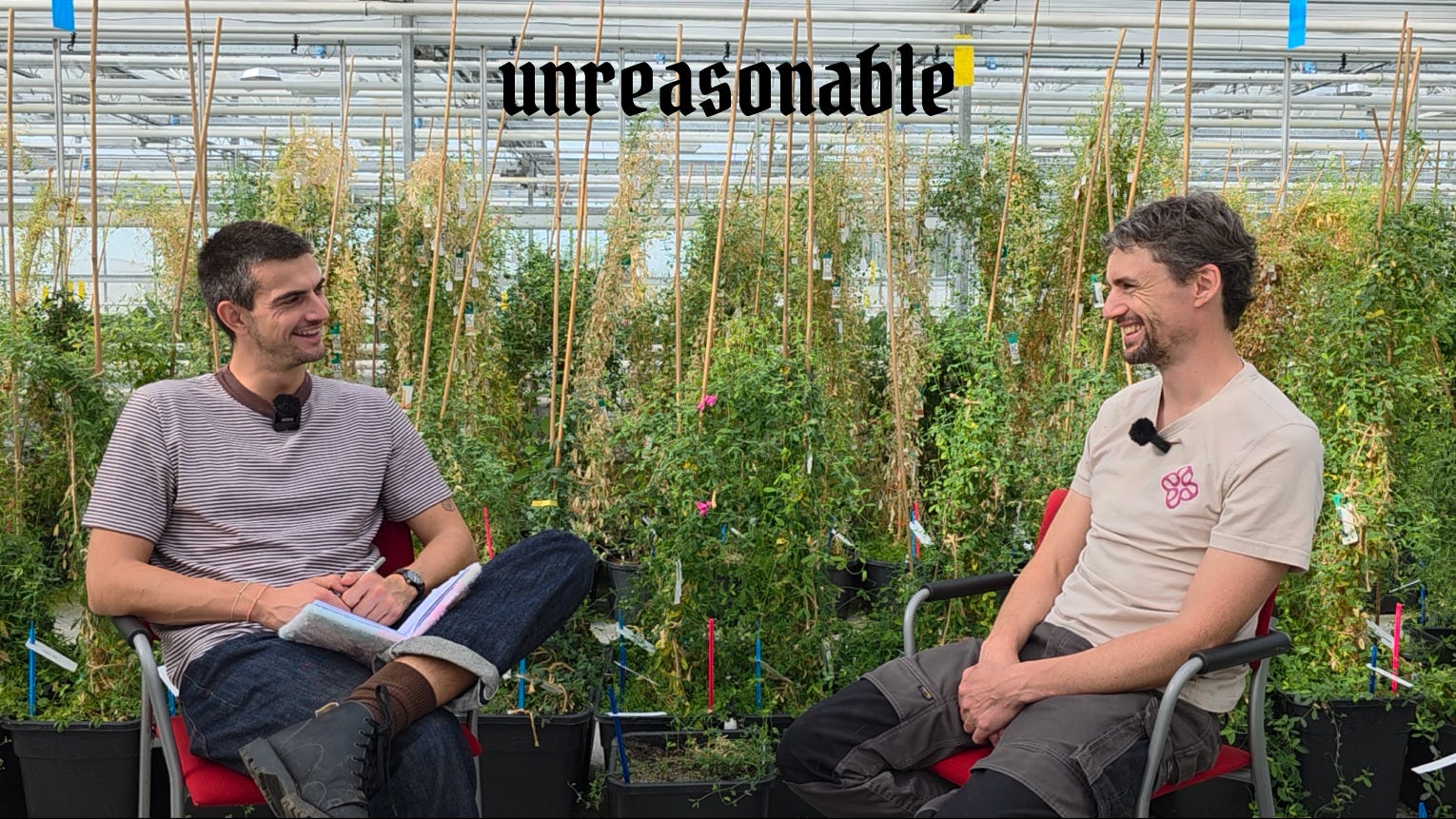
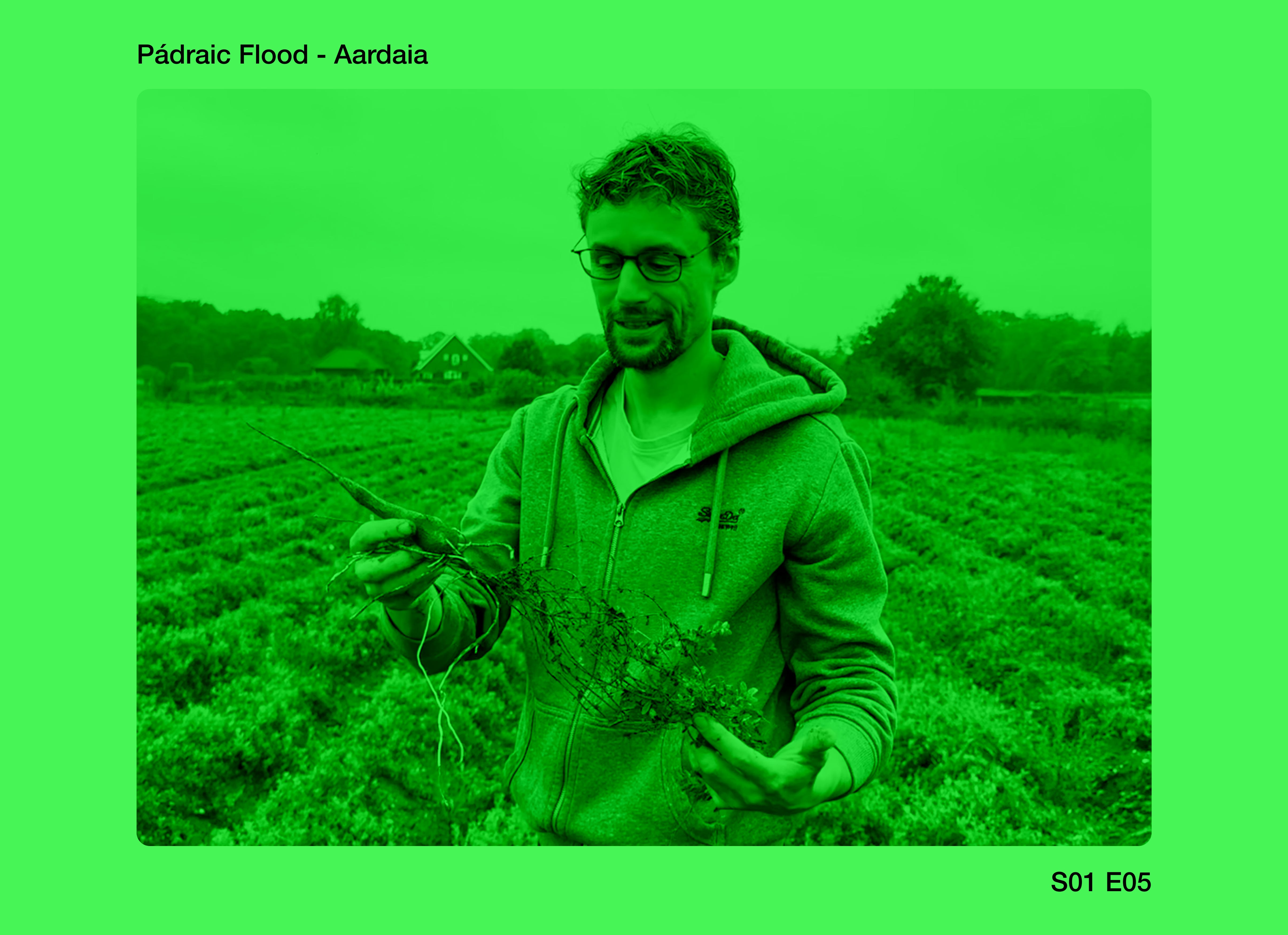
Pádraic Flood isn’t your typical start-up founder, but neither is Aardaia your typical start-up. An Irishman based in Wageningen, the Netherlands, Padraic is a Phd holding plant scientist, domesticating previously wild crops to protect the world’s increasingly fragile protein supply.
His background is as unusual as it is fascinating, spending the majority of his career in academia and the Max Planck institute, then making the jump into start-ups first at short-lived vertical farming darling Infarm, before finally founding his own company with co-founder Mike Henske.
Pádraic is potentially the most passionate person I’ve ever met (a feat given the number of founders I spend time with each year), incapable of staying off the topic of plants for more than a few minutes. He combines a mellifluous Irish brogue with a wonderful capacity to tell stories, weaving in his deep and wide knowledge of everything from ancient history to climate science, and inspiring action in the process.
Aardaia’s focus is replacing the starch and water heavy potato with the nutrient dense, protein rich aardaker - a tuber once enjoyed by Renaissance European populations. From here, who knows where they go, but the journey is already a fascinating one and worthy of a wider audience.
I had the pleasure to meet him back in 2025, going deep on the company before eventually making a small angel investment and I can honestly say I’ve thought about the business at least weekly ever since. As such, Pádraic was a no brainer to interview as our fifth guest on Unreasonable.
In a greenhouse in rainy Wageningen, we covered:
Why we eat the crops we do, and how our grain obsession is largely down to taxation
The importance of consistent protein supply in a rapidly changing climate
What is an aardaker - the forgotten, protein rich tuber that makes its own fertiliser
What domesticating a wild crop actually requires, and how novel technology can massively speed this up vs. legacy techniques
His backstory: a pet pig that never was in suburban Dublin, via Germany, trips up African and Eurasian mountains, to the fields of Wageningen
Why seeds are the closest thing agtech has to software, and why big seed companies wait for startups to prove new crops
How head and heart interact in his decision making
Failure as a feature, and why failing fields are exactly what a breeding programme needs
The hope that comes through re-introducing a crop that could still be eaten in 10,000 years
Timestamps:
00:00 — Who is Pádraic Flood?
00:53 — Why we eat the crops we do: beer, bread and taxation
06:29 — Food systems: victim and villain
08:35 — The Green Revolution and the time it bought us
11:29 — Meet the aardaker: a forgotten tuber that makes its own fertiliser
14:43 — Five times the protein of soy
15:55 — Speed-running 10,000 years of domestication
21:00 — Why farmers, chefs and markets care
26:39 — Why aardaker protein beats soy
28:44 — Why big seed companies haven’t done this
31:08 — The crops of the future
31:38 — New crops or better old ones? 400 million years of untapped evolution
35:36 — Growing up in Dublin: trees, botanic gardens and clothes shopping
36:41 — The pet pig that never was
38:42 — A family of tradespeople: “you’re always self-employed”
39:35 — Getting your hands dirty: lab, field and screen
42:27 — Botany, Max Planck and the mountains of Africa
45:40 — COVID, two toddlers and a change of course
49:20 — Lessons from a €600M vertical farming startup
51:34 — Head and heart: how he makes decisions
54:18 — Failure, doubt and risk tolerance
57:06 — When others don’t share your passion
1:00:20 — Finding great people in agtech
1:03:10 — Why failing fields are good news
1:05:45 — Seeing what others miss
1:07:57 — Staying hopeful: bailing water on a sinking boat
1:10:27 — What success looks like: a crop to last 10,000 years